REVIEW · JOHANNESBURG
Half-Day Walking Tour in Soweto
Book on Viator →Operated by Nkuli walking tours · Bookable on Viator
Township history is walking-distance here. This half-day Soweto walk focuses on real people and landmark stories, led by a local guide from Nkuli Walking Tours. You’ll move through Freedom Square, student protest memory at Hector Pieterson Memorial, and everyday streets like Vilakazi Street.
I love that the pacing is set for a full experience in about 5 hours, with short stops you can actually absorb. I also like the mix of viewpoints: political milestones at Walter Sisulu Square, plus murals and daily life at Orlando Towers, then soccer heritage and community programming later.
One consideration: this is a walking tour, and it depends on good weather, so plan for warm sun or cool evening conditions and bring what you need to stay comfortable.
In This Review
- Key things I think you’ll like most
- Why this Soweto walk feels different from the typical highlights loop
- Getting your bearings: meeting point, pace, and practical expectations
- Walter Sisulu Square and the Freedom Charter: start with the big idea
- Orlando Towers: murals, corporate art, and the Power Park identity
- Orlando East and match-box houses: housing, roots, and soccer pride
- Hector Pieterson Memorial: the 1976 student protest that shifted everything
- Vilakazi Street: Nobel Peace Prize connections plus food, crafts, and music
- Soweto Brewing Company: tasting local beer with context
- 58 Beacon Rd in Kliptown (The Shalk): a community project you can meet
- Mandela House: iconic, but admission isn’t included
- Price and value: is $32 worth it for 5 hours in Soweto?
- Who should book this Soweto walking tour
- Should you book this Soweto half-day walking tour?
- FAQ
- How long is the Half-Day Walking Tour in Soweto?
- Where does the tour start and end?
- How much does the tour cost?
- What’s included in the tour price?
- Are tickets and admission included for all stops?
- Is WiFi available during the tour?
- What group size can I expect?
- What happens if the weather is bad or I need to cancel?
Key things I think you’ll like most
- Local guide from Soweto: you get culture and context, not just facts.
- Historic stops with easy timing: multiple locations, each around 30–40 minutes.
- Vilakazi Street in the real world: meals, art & craft, music, and street energy.
- Orlando Towers murals plus extreme sports nearby: you see the landmark and what it’s known for.
- Soweto beer tasting option at Soweto Brewing Company.
- Community visit in Kliptown (The Shalk): time with a youth-focused project for daycare and afternoon programs.
Why this Soweto walk feels different from the typical highlights loop

Soweto can be approached like a checklist. This tour is built more like a guided walk through a living place, with a local guide who actually lives in Soweto. That matters, because you’re not just looking at monuments—you’re learning how people live alongside the history.
You also get a smart “half-day” design. The route is paced so you can move from square to street to memorial without feeling like you’re sprinting between stops. And because it’s an easy format that fits different ages, it doesn’t feel like a hardcore hike disguised as culture.
If you care about South Africa beyond the well-known photos, this is a solid way to do it. You’ll see areas connected to major turning points, then finish in places tied to daily routines—markets, a brewery, and a community project in Kliptown.
You can also read our reviews of more walking tours in Johannesburg



Getting your bearings: meeting point, pace, and practical expectations

The tour starts at Soweto Hotel & Conference Centre on Union Ave, in Kliptown, Soweto, and it ends back at the same meeting point. That round-trip setup makes the logistics simple: you don’t need to plan a second ride or track a separate finish location.
Expect about 5 hours on the move, with multiple short stops. Most stops are around 30–40 minutes, so you can take photos, listen carefully, and still have time to ask questions. Group size is capped at 60 travelers, which usually keeps the walk from turning into a huge, slow shuffle.
A few practical notes that help a lot:
- Wear comfortable shoes with good grip. You’re walking through streets that are part of everyday life.
- Bring water and a light layer if weather turns.
- Since it’s weather-dependent, check conditions before you go—especially for hot sun or heavy rain.
- Snacks are included, so you won’t be stuck hunting for food during the tour.
- There’s no onboard WiFi, so download any maps or key info ahead of time.
Walter Sisulu Square and the Freedom Charter: start with the big idea
You begin at Walter Sisulu Square—a key setting for understanding political change. The Freedom Charter was signed in 1955 by the Congress of the People, and this stop is designed to connect that document to the democratic future people were fighting for.
What makes this start work is the atmosphere. This square is also known for a daily fruit and vegetables market. So you’re not learning history in isolation. You’re learning it in a place where people gather for ordinary needs—food, conversation, and community rhythm.
The practical upside: this stop gives you context early, so later memorials and stories make more sense. The slight downside is that if you’re sensitive to heavy political topics, you may want to pace yourself emotionally right at the start.
Orlando Towers: murals, corporate art, and the Power Park identity
Next is Orlando Towers, also popularly known as the Power Park. This is described as the tallest landmark of Soweto, and the visual impact is the point. You’ll see very tall artwork murals—some advertise corporate businesses while others depict daily life in Soweto.
A useful way to understand this stop: it’s not only about the building. It’s about how public space communicates identity. The murals act like a loud street-language, where art becomes both advertisement and storytelling.
Orlando Towers is also associated with extreme sports nearby, including bungee jumping and free fall. You don’t necessarily need to do the activity to appreciate the meaning—this area is known for adrenaline as much as it is for art. That contrast is part of the “you’re in a real place” feeling.
If you’re traveling with kids or teens, this stop often lands well because it’s visual and immediate. If you prefer quieter, strictly historical stops, you may find the energy here more “street” than “museum.”
Orlando East and match-box houses: housing, roots, and soccer pride
Then you head to Orlando East, where you’ll see the original first brick homes of the township. These are popularly known as match box houses. The name gives you a mental picture of small, tightly packed living spaces—useful for understanding how urban planning and apartheid-era realities shaped everyday life.
Orlando East also carries major soccer heritage, with Orlando Pirates described as the biggest soccer club in Soweto. That detail isn’t random. Soccer in South Africa often functions as community glue, and this is a place where sports identity is part of local pride.
This stop has two benefits:
- It ties built environment to community identity.
- It helps you understand how culture moves through daily routines, not only political events.
A consideration: the conversation here can get specific about the township’s past. If you don’t enjoy learning through difficult social context, you might want to mentally prepare for that tone.
A few more Johannesburg tours and experiences worth a look





Hector Pieterson Memorial: the 1976 student protest that shifted everything
At Hector Pieterson Memorial, the tour focuses on the Soweto uprising in 1976. This student protest happened when young people protested the introduction of Afrikaans as the language of instruction. The uprising is described as the beginning of the end of the Apartheid system, especially as the country faced international sanctions.
This is the moment where the tour gets most serious. Memorial sites ask you to slow down. Even though your time here is around 40 minutes, it can feel longer because the subject matter is heavy and personal.
If you’re traveling with family, it helps to talk before you arrive: this is not a “just look around” stop. It’s a learning stop with emotional weight. Bring questions; your guide can likely explain the story in a way that matches your group’s comfort level.
Vilakazi Street: Nobel Peace Prize connections plus food, crafts, and music
Now you move to Vilakazi Street, famous for being the only street in the world with two Nobel Peace Prize winners connected to it—Nelson Mandela and Archbishop Desmond Tutu. This is a roughly 1km stretch, and the tour uses it as both a history lesson and a practical break.
The value here is how the street functions. You’ll find restaurants, an art & craft market, musicians, and traditional dancers. In other words: this isn’t just a photo stop. It’s a place where people spend time, eat, shop, and listen to music.
I like that this stop gives you choices without forcing them. You can focus on the historic connection, then turn your attention toward local vendors and street performance as you feel like it.
One consideration: because it’s a lively street, it can feel crowded at peak times. Keep track of your group if you step away to grab a snack, and don’t assume you’ll have quiet space for long conversations.
Soweto Brewing Company: tasting local beer with context
Next up is Soweto Brewing Company, where you can taste local Soweto beer and also get a special tour of the brewery. This is around 30 minutes, so it’s not a full brewery day—but it’s enough time to connect product to place.
Why this matters: alcohol tasting tours can sometimes feel like a detour. Here, it’s more like cultural layering. After the political and memorial stops, you get something grounded in craft and everyday business.
If you like food-and-drink experiences, this is one of the most memorable parts of the route. If you don’t drink alcohol, you might still enjoy seeing how the brewery presents itself—but you’ll want to check how tasting is handled in practice, since the tour description specifically mentions tasting.
58 Beacon Rd in Kliptown (The Shalk): a community project you can meet
The tour also includes a visit to a local community project in Kliptown called The Shalk, located at 58 Beacon Rd. Here, the focus is on positive programs for young people and kids, including daycare and afternoon programs.
This is a key human moment on the itinerary. Instead of only learning from signs or buildings, you get time to interact with kids and see community effort up close. It’s short—about 30 minutes—but that short window can make the tour feel real in a way that monuments alone can’t.
A good practice: be mindful and respectful when interacting with children. Your guide will help you understand the right tone and boundaries. If you’re traveling with kids of your own, this stop can also be a meaningful learning experience in empathy and community support.
Mandela House: iconic, but admission isn’t included
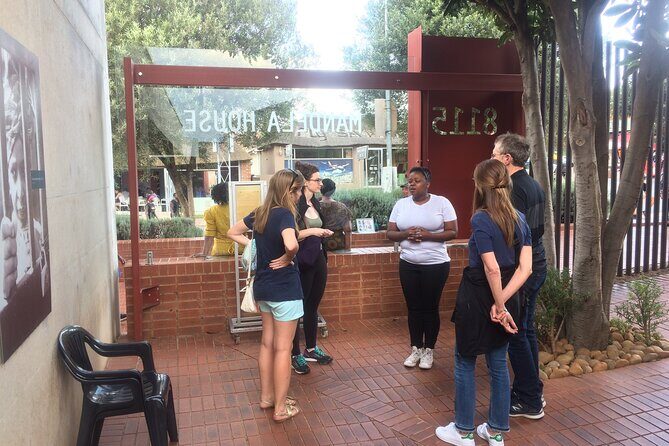
The final highlighted site is Mandela House. It’s described as an iconic landmark tied directly to South African history, and the tour connects it with the Mandela legacy you’ve been building toward through earlier stops.
Important detail for planning: Mandela House admission is not included in the tour. That means you may need to budget extra if you want to enter, depending on how your guide structures the visit and what access is available during your stop.
Time here is around 30 minutes, so it works best if you already know whether you want to pay for entry. If you’re trying to keep the trip tightly within your budget, decide in advance so you’re not forced into a last-minute choice.
Price and value: is $32 worth it for 5 hours in Soweto?
At $32 per person, this tour sits in the “good value” zone for a guided, multi-stop half-day in a major city neighborhood. Here’s why it feels worth it based on what’s included and how the stops are built.
First, snacks are included, so you’re not spending part of your tour budget on quick food runs. Second, most stops are listed with free admission tickets—Walter Sisulu Square, Orlando Towers, Orlando East, Hector Pieterson Memorial, Vilakazi Street, Soweto Brewing Company, and The Shalk all have admission ticket free mentioned. That’s a big deal in terms of real out-of-pocket cost.
The only major exception in the tour flow is Mandela House, where admission isn’t included. Once you account for possible extra entry cost there, the overall value still tends to hold—because the tour is packed with multiple landmark types: civic history, murals and housing context, memorial learning, daily-street culture, beer tasting, and community programming.
Finally, the local-guide angle is part of the value. When a tour is built for interaction with everyday life, the “price per hour” becomes less about logistics and more about getting context you’d likely miss if you self-guided it.
Who should book this Soweto walking tour
This half-day walk is best for you if you want:
- A structured way to see Soweto without trying to stitch together multiple separate activities.
- A guide-led focus on both history and local daily life.
- A route that includes political milestones and human-scale community visits.
It also makes sense if you’re traveling solo. The tour is designed so individuals can still get the full benefit of the guide’s explanations without feeling left out. And because it’s described as easy and suitable for different ages, it’s not only for hard-core city walkers.
If you mainly want a museum-only experience with quiet indoor stops, this might feel more street-level than you prefer. But if you like real neighborhoods and learning from place-based details, you’re in the right spot.
Should you book this Soweto half-day walking tour?
I’d book it if you want a safe-feeling, locally guided introduction to Soweto that mixes landmarks with lived-in parts of the community. The price-to-time ratio is strong, snacks are included, and the route hits meaningful stops like Freedom Charter context and the Hector Pieterson Memorial story—then balances it with Vilakazi Street culture, a brewery tasting, and a visit to The Shalk in Kliptown.
I’d think twice if you’re extremely sensitive to difficult political subjects, or if you’re not comfortable with weather-based plans and walking for about five hours. Also, if Mandela House entry is a must for you, plan for that extra cost since it’s not included.
If you’re aiming for an authentic, guided sense of Soweto—more than a photo tour—this one is a sensible choice.
FAQ
How long is the Half-Day Walking Tour in Soweto?
It lasts about 5 hours.
Where does the tour start and end?
The meeting point is Soweto Hotel & Conference Centre, Union Ave, Kliptown, Soweto, and the tour ends back at the same meeting point.
How much does the tour cost?
The price is $32.00 per person.
What’s included in the tour price?
Snacks are included.
Are tickets and admission included for all stops?
Most stops are described as having free admission tickets. Mandela House admission is not included.
Is WiFi available during the tour?
No WiFi on board is included.
What group size can I expect?
The tour has a maximum of 60 travelers.
What happens if the weather is bad or I need to cancel?
The experience requires good weather. If it’s canceled due to poor weather, you’ll be offered a different date or a full refund. You can cancel for a full refund up to 24 hours before the start time.